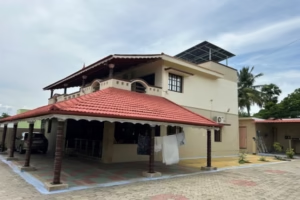
5 kW Solar System in Erode Sasthri Nagar: How One Family Started Saving ₹10,000 Per Bill

What if your next electricity bill dropped by almost ₹10,000?

This is exactly what happened for a real family in Sasthri Nagar, Erode after installing a 5 kW solar system in Erode on their rooftop with the help of a government subsidy. Their home was facing high power bills, especially in summer, and like many families in Tamil Nadu, they were tired of rising electricity costs.

Today, their Sasthri Nagar solar project is cutting their bills by about saving 10,000 rupees per bill, while also giving them the satisfaction of using clean energy. If you are a homeowner in Erode or anywhere in Tamil Nadu, this story will help you see what a 5 kW rooftop solar system can really do for a normal house.

Homeowner Background: Why This Sasthri Nagar Family Chose a 5 kW Solar System

For this project, let us call the homeowners Mr. Sebastin and family. They live in a 3 BHK independent house in Sasthri Nagar, a typical middle class home with all the usual comforts.

Their daily power use looked like many homes in Erode:

  • 2 air conditioners (used mainly during evenings and hot afternoons)
  • 1 refrigerator
  • 1 washing machine
  • Multiple ceiling fans in every room
  • LED lights, TV, mixer, and other kitchen appliances

In a place like Erode, where the heat can be harsh for many months, fans and ACs run for long hours. The family wanted comfort, but each time they switched on the AC, they also thought about the upcoming TNEB bill.

Before solar, their average electricity bill every two months was in the range of ₹10,000 to ₹12,000. During peak summer, it sometimes crossed this level. The bill pattern started to feel like a cycle of worry.

They noticed a few things:

  • Every time they tried to reduce AC usage, comfort dropped.
  • Even with careful use, the bill did not fall much.
  • Talks about future tariff hikes made them even more nervous.

They did not want to spend the next 20 years complaining about power costs. They wanted a long term fix that matched their regular lifestyle. That is where the idea of a 5 kW rooftop solar system came in.

Electricity Bill Problem: Rising Costs Before Solar Installation

The pain point was simple. Every two months, when the TNEB bill arrived, the family felt the shock.

During normal months, the bill came to around ₹8,000 to ₹10,000. In hot months, with more AC use, the bill often touched ₹12,000 or more. For a single household, this was a big chunk of their monthly budget.They also heard from friends that power tariffs could go up again in the future. The thought of even higher bills was stressful. Sometimes they tried to cut down AC use and told the children to switch off fans and lights all the time. It helped a little, but not enough to change the bill in a big way.

Electricity bills had become a regular source of tension. They wanted a solution that did not depend on guesswork or constant sacrifice.

Checking Options: Why a 5 kW Rooftop Solar System Was the Right Fit

At first, Mr. Sebastin and family tried small changes:

  • Replacing older bulbs with LEDs
  • Using the washing machine in the daytime
  • Keeping ACs at 24–26°C

These steps helped, but only slightly. The real shift started when they began to look at solar power for their home in Erode.

After a detailed discussion and load study, a 5 kW rooftop solar system came out as the ideal size because:

  • It matched their connected load and typical daily usage
  • Their rooftop had enough shadow free space for the panels
  • 5 kW could cover a major part of their daytime consumption
  • It is a common and practical size for medium to large homes in Tamil Nadu

They also liked the idea that the energy would come from sunlight on their own roof. No fuel, no noise, just quiet panels working all day.

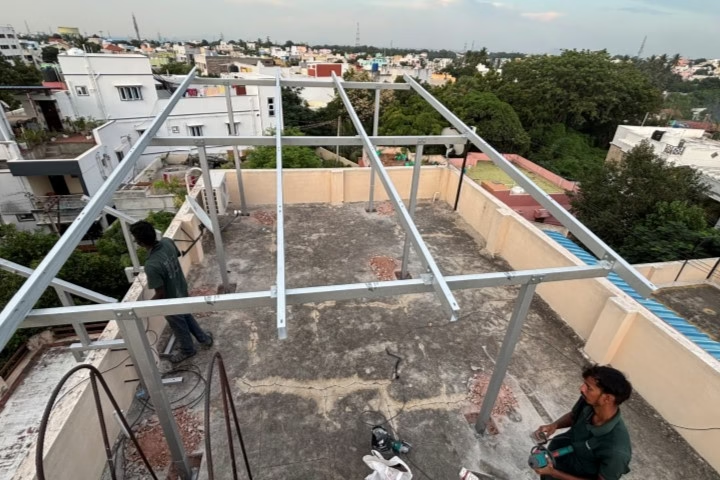
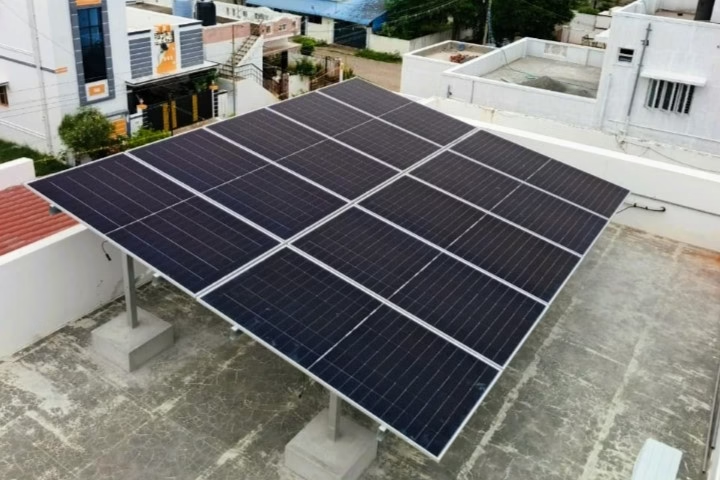
high roof solar structure erode 5kw
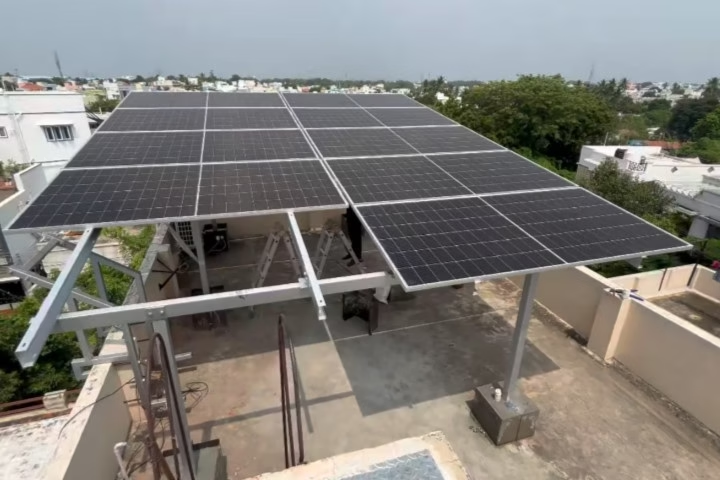
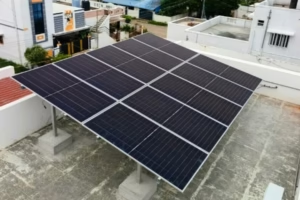
5kw solar panel installation

Project Details: How We Installed the 5 kW Solar System in Erode Sasthri Nagar

This project was a grid tied 5 kW rooftop solar system, without batteries. The home stayed connected to the TNEB grid, and a net meter recorded both import and export of power.

The full project moved through these key stages:

  1. Site visit and roof assessment
  2. Solar system design and layout planning
  3. Selection of panels, inverter, and safety devices
  4. Installation and wiring
  5. Net metering and final commissioning

Site Visit and Solar Design: Making Use of the Sasthri Nagar Rooftop

During the first visit, the team carefully checked:

  • Roof type and strength (concrete rooftop with enough load bearing capacity)
  • Available space for panels
  • Shade from nearby buildings, trees, or water tanks

Sasthri Nagar has fairly open skies in many streets, which is great for solar. The design team created a layout that kept all panels in rows with proper spacing so they would not shade each other.The panels were positioned in the best possible south facing orientation, with a suitable tilt to catch maximum sunlight through the year. Since Erode gets strong sun for most months, this design helped the system reach good output almost every day, except during very cloudy or rainy spells.

Equipment Used: Panels, Inverter, and Safety Components

For this 5 kW rooftop solar system, the main components included:

  • High efficiency solar panels totaling about 5 kW capacity

  • 5kW Deye Invverter

Most good quality solar panels come with a product warranty of around 10–12 years and a performance warranty of up to 25 years. Inverters usually have a life of 8–12 years with proper care.

If you want to read more about typical 5 kW rooftop solar system components and pricing trends in Tamil Nadu, you can check this guide on solar system price and subsidy in Tamil Nadu.

The focus for this Sasthri Nagar project was simple: use quality solar panels in Erode that would produce stable power for a long time, with strong protection on the electrical side.

Installation and Net Metering: Connecting the 5 kW System to the Grid

The physical installation took about 2 to 3 days:

  • Day 1: Mounting structures fixed on the roof and alignment checked
  • Day 2: Solar panels installed and DC wiring completed
  • Day 3: Inverter mounted, AC wiring done, and internal testing

After the wiring and internal tests, the next step was net metering with TNEB. The team applied for a net meter, and after inspection and approval, the special bidirectional meter was installed.

Net metering in Tamil Nadu works in a simple way:

  • When the solar system produces more power than the home is using, extra units flow to the grid
  • The net meter records how much power is sent out and how much is taken from the grid
  • At the end of the billing cycle, the units are adjusted as per the policy

If you want to see official guidelines, you can refer to the Subsidy eligible for Solar Rooftop and related details on the TNEB subsidy page.

Once the net meter was live, the home started sending clean power back to the grid on bright days.

Government Subsidy and Savings: How This 5 kW Solar System Cut ₹10,000 from Each Bill

The most exciting part for the family was the financial outcome. The combination of government subsidy and strong sunlight in Erode turned the project into a smart long term investment.

On average, a 5 kW solar system in a place like Erode can generate around 18 to 22 units per day over a year, depending on weather and system quality. That works out to roughly 540 to 660 units per month. Over a two month billing cycle, that is more than 1,000 units in many cases.

These units replace grid power that the home would normally pay for. The result is a sharp drop in the electricity bill.

Using the Government Solar Subsidy in Tamil Nadu for a 5 kW System

Mr. Sebastin and family used the central government rooftop solar subsidy available for residential homes. They applied through an approved channel following the process given on the National Portal for Rooftop Solar.

The subsidy is usually calculated as a percentage of the benchmark cost for the system size and is credited after proper verification. Since subsidy rates can change from time to time, it is always better to check the latest details on the same portal or with your installer.

For this Sasthri Nagar project, the subsidy reduced the upfront cost of the 5 kW system by a significant amount. That made the decision easier, because the family could see a clear path to recovering their investment through future bill savings.

From High Bills to Big Savings: ₹10,000 Less on Each Electricity Bill

Before solar:

  • Typical two month bill: around ₹10,000 to ₹12,000

After solar:

  • Bill reduced by about ₹10,000 per cycle
  • In some months, the payable amount dropped to a very small figure

In simple words, the 5 kW solar system in Erode now covers most of their regular usage, especially during the day when the panels are active. At night, they still draw power from the grid, but the net impact on the bill is much lower because daytime solar units are adjusted.

The family now uses their appliances with more peace of mind. They still avoid waste, but they no longer panic every time they turn on the AC. The system works quietly in the background, turning sunlight into savings.

Payback Period: When Will the 5 kW Solar System Pay for Itself?

Let us use easy round numbers to understand the payback.

Suppose the total cost of the 5 kW system was in a certain range, and after subsidy, the net cost came down to a reasonable amount. If the family now saves about ₹10,000 per bill, and TNEB issues bills every two months, that means:

  • Savings per year are roughly ₹60,000 (₹10,000 × 6 cycles)

With this level of savings, many 5 kW residential systems in Tamil Nadu can reach payback in about 4 to 6 years, depending on exact cost, usage pattern, and tariff slabs.

After the payback period, the remaining life of the system, often 15 to 20 more years, is almost pure savings on electricity, apart from small maintenance costs.

Conclusion

This Sasthri Nagar solar project in Erode shows what a well planned 5 kW rooftop solar system can do for a normal 3 BHK home. With the help of a government subsidy and a good quality installation, Mr. Sebastin and family now save around ₹10,000 on each electricity bill, enjoy more comfort, and rely less on rising power tariffs.

The benefits are clear: lower bills, more control over future costs, and clean energy that supports a healthier environment.

If you live in Erode or nearby areas, this is a good time to look at your own roof and power use. Check your last few TNEB bills, see how much you spend, and imagine what a 3 kW or 5 kW system could do for you.

Your next step can be simple: speak to a trusted solar installer groena solar, ask for a site assessment, and review the latest subsidy details on official portals. The sunlight is already free. The question is, are you ready to use it to cut your next bill?

Contact Groena

www.groena.in  |  sales@groena.in

+91 9444155479  |  +91 8778182864

Helpful Resources

Share this post :
Facebook
Twitter
LinkedIn
WhatsApp

Related Posts

Scroll to Top

Quick Enquiry

Feel free to reach us for free consultation and move towards your future with renewable energy.

Check How Much Solar You Need for Your Home

(உங்கள் வீட்டில் எவ்வளவு சோலார் அமைக்கலாம் என்று தெரிந்து கொள்ள விரும்புகிறீர்களா? கீழே உள்ள படிவத்தை பூர்த்தி செய்யுங்கள்

🌞Special Offer : Apply through this form and enjoy a  2% savings on your solar project cost.